

The Boch Chicken Farm continues to take shape in Wajinja…
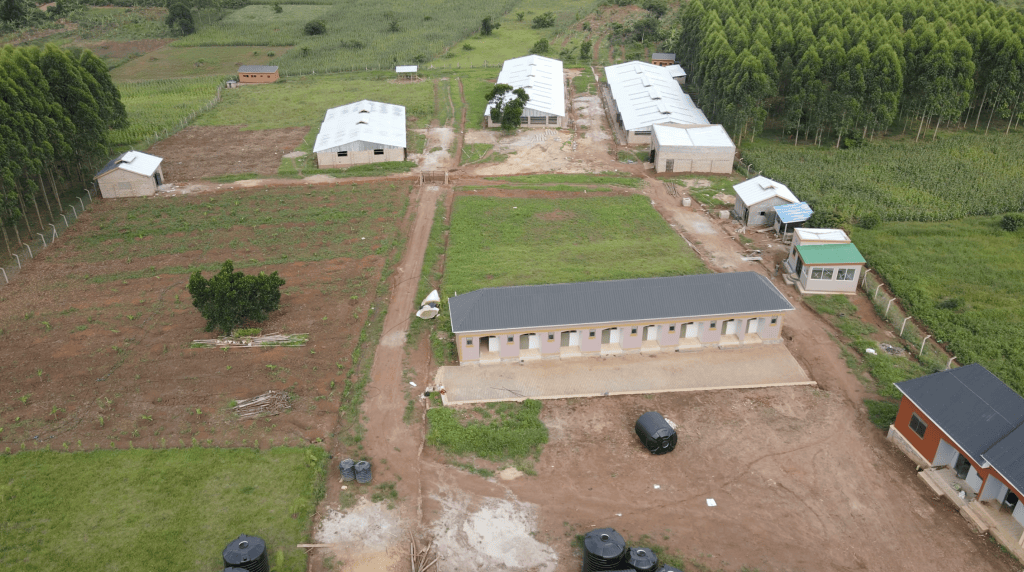
From above, you can see just how much the project has grown, with the poultry facilities now joined by sleeping quarters for the workers who will help operate the farm as it moves closer to completion.
Designed to eventually house approximately 21,000 chickens and provide jobs and training for more than 20 local villagers, the farm is being developed as a long-term source of both nutrition and economic opportunity. Eggs and poultry will help supply the community and Boch Café, while revenue generated by the farm can support additional projects throughout Wajinja.
As construction continues, additions like the new workers’ sleeping quarters are another sign of how much the farm has grown, and another step toward its future as a source of food, employment, and opportunity in Wajinja.
Boch Agro Farm Tour
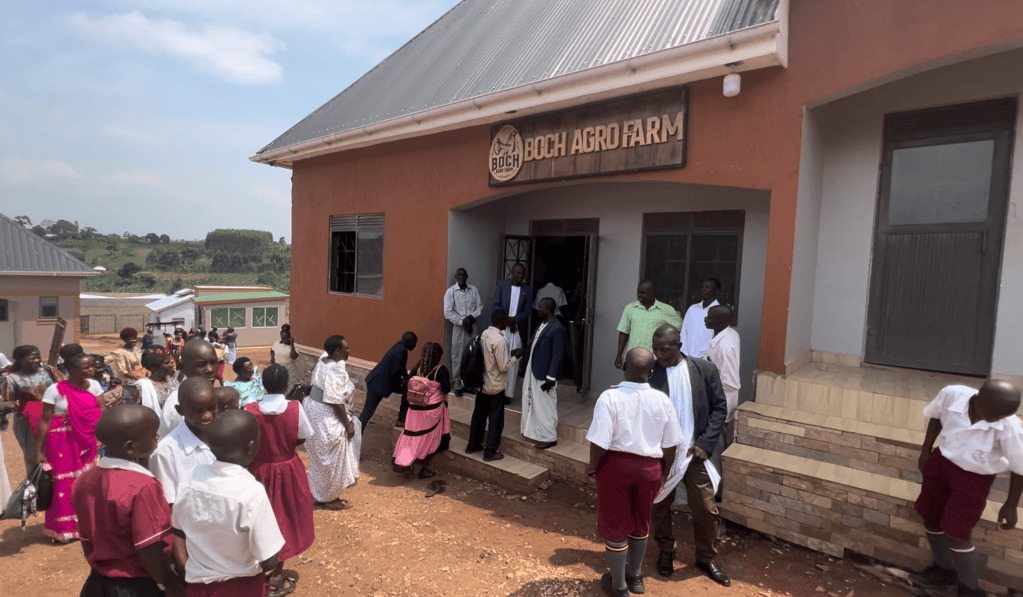
Agriculture is an important part of everyday life in Wajinja, and it is also becoming a growing part of the work of Boch Project Uganda.
A recent tour through the farms offered a look at some of that work firsthand, from the land already being cultivated to one of the Project’s largest new undertakings: the Boch Chicken Farm, now nearing completion.
Designed as much more than a place to raise chickens, the new farm is being developed as a long-term source of food, employment, training and income for the community. Once fully operational, the facility is planned to house approximately 21,000 chickens and employ more than 20 local villagers.
Fresh eggs will provide an additional source of nutritious food in Wajinja, with a particular focus on helping children and other vulnerable members of the community. Poultry and eggs from the farm are also planned for use at Boch Café, further connecting the Project’s agricultural work with the growing network of services already operating in the village.
The farm is being modeled after a successful poultry operation in a nearby village, with local training and employment built into its plans. In addition to eggs and poultry, the operation has the potential to generate income through breeding and organic manure that can be used as fertilizer.
Revenue generated by the farm can then be put back into future Boch Project Uganda initiatives, creating another locally based source of support for continued work in Wajinja.
From growing food to creating jobs and supporting other projects throughout the village, the farms are another example of how each new piece of infrastructure can connect with the next.
And with construction of the Boch Chicken Farm nearing completion, that next piece is getting very close.